
Course Detail - Reputation Management
Category
QCTO Qualification

Advanced Emergency First Aid Responder

5 Days
SAQA ID SP-230803
NQF Level 4
6 Credits
Overview
Learning Outcomes
Training Methodology
Modules

This course includes:

Learning Material
Access on mobile
12 Comprehensive modules
Access to class recordings
Learning Support throughout
Certificate of completion

About This Course

This programme provides advanced training in emergency first aid, benefiting occupational health and safety (OHS), society, and the South African economy. Learners acquire the knowledge and skills needed to deliver high-quality emergency care, improving patient outcomes, reducing illness and injury rates, and strengthening overall healthcare services. By training personnel across multiple industries, the programme enhances workplace safety, reduces the risk of accidents, and helps lower occupational claims and medical costs.

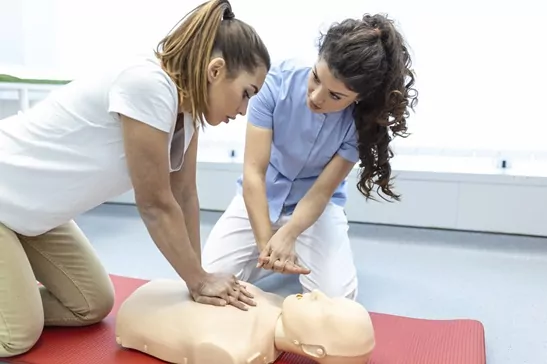
The SP-230803: Advanced Emergency First Aid Responder programme prepares employees to function as Advanced Emergency First Aid Responders, capable of providing advanced care in critical or life-threatening situations.

Entry Requirements

Skills Certificate: Intermediate Emergency First Aid, NQF Level 3.

Course Duration

5 Days

Career Opportunities

  • Ambulance services or air medical transport.
  • Occupational health and safety roles, ensuring workplace safety and compliance.
  • Industrial safety companies, offering emergency response services and training in sectors like construction, manufacturing, and mining.
  • First aid training, teaching advanced courses in schools, community centres, or corporate settings.
  • Sports and recreation facilities, providing first aid support to staff, athletes, and spectators.


By the end of this course, learners will be able to:

  • Coordinate and manage first aid providers at an emergency scene.
  • Deliver advanced medical care for a variety of critical conditions.
  • Provide wound care within the advanced first aid scope.
  • Perform life support interventions using advanced first aid techniques.
  • Handover patients to higher medical care with accurate and complete documentation.

Our diverse instructional approaches ensure effective learning:

  • Lectures & Presentations: Engage with expert-driven, stimulating content.
  • Course Material: Access well-crafted supporting resources.
  • Group Work: Collaborate on discussions and case studies for practical insights.
  • Workshops & Role-Play: Participate in immersive, scenario-based activities.
  • Practical Application: Focus on applying theoretical knowledge in real situations.
  • Post-Training Support: Receive extensive support after training for skill implementation.
Module 1: Principles of Risk-Based Advanced First Aid
Understand the advanced first aider’s role within the emergency healthcare system and coordination with other response services, including leadership responsibilities.
Apply legal and ethical principles when providing risk-based advanced first aid.
Maintain personal health and safety, including correct use of PPE and mental preparedness.
Develop awareness of mental health for both the first aider and the patient, including stress management, recognizing post-traumatic stress, and participating in debriefing.
Demonstrate sensitivity to cultural and gender diversity when providing care.
Module 2: Applied Advanced Emergency First Aid
Conduct hazard and risk assessments at emergency scenes.
Assess affected individuals effectively and provide appropriate care.
Apply communication principles with patients, bystanders, and emergency services.
Understand and perform core advanced first aid actions, including continuous patient monitoring.
Maintain accurate records and incident reports, understanding potential consequences of errors.
Apply post-incident procedures, including cleanup and post-exposure safety measures.
Understand and perform core advanced first aid actions, including continuous patient monitoring.
Module 3: Human Anatomy and Physiology for Advanced First Aid
Understand anatomical positions and directional terms for accurate care.
Identify surface anatomy landmarks, body cavities, and organ locations.
Learn the structure and function of body systems relevant to emergency care
Module 4: Advanced Emergency First Aid Concepts and Techniques
Primary and Secondary Assessment
Emergency Care Techniques
Trauma Management
Medical Emergencies
Environmental and Other Emergencies
Module 5: Applying Advanced Emergency First Aid Techniques
Evaluate diverse emergency situations and apply risk-based advanced first aid interventions to manage incidents effectively.
Search
Courses

Please enter keywords